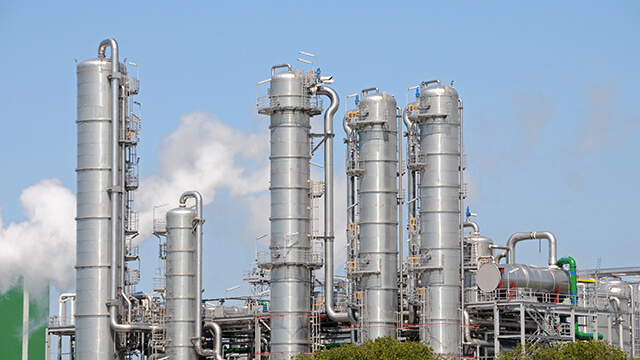
Producción de bioetanol
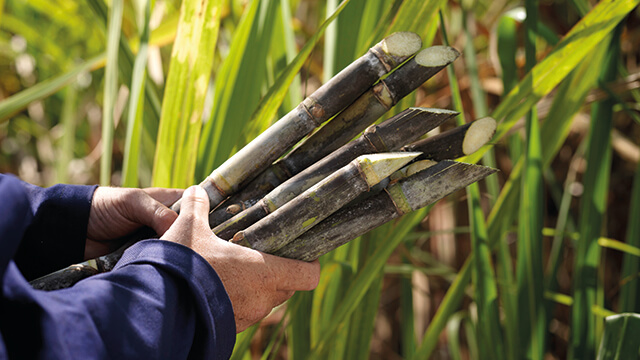
El bioetanol se mezcla con el combustible para el transporte con el fin de reducir su huella de carbono global, y se produce mediante la fermentación de materias primas biológicas como la caña de azúcar y el maíz. Otros cultivos ricos en almidón son el trigo, la cebada, el arroz y la tapioca, aunque también pueden utilizarse fibras celulósicas procedentes de residuos agrícolas y de madera, cultivos energéticos específicos y residuos industriales.
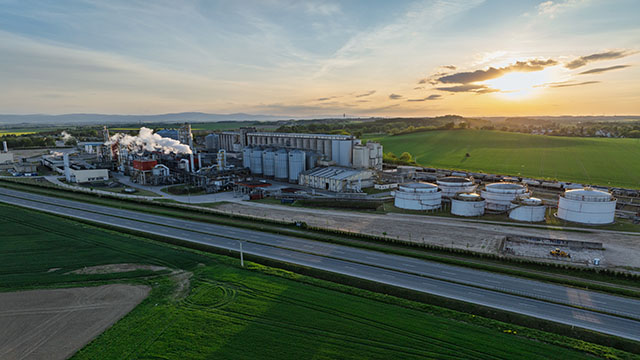
Alfa Laval ayuda a los productores en su esfuerzo por hacer que la producción de bioetanol sea más rentable y sostenible, permitiéndoles:
- Saca el máximo partido a cada fase del proceso con componentes que ayudan a maximizar el rendimiento, el tiempo de actividad y la calidad del producto
- Consiga un rendimiento de separación, una fiabilidad y una eficiencia energética óptimos utilizando decantadores líderes en el sector
- Aumente la eficiencia mediante la recuperación de calor con intercambiadores de calor de alto rendimiento
- Acceda a tecnologías innovadoras preparadas para su uso en todas las fases del proceso, independientemente de la materia prima
Process steps
Pre-treatment section
Alfa Laval WideGap plate heat exchangers, with their extra-wide spacing between plates, have been specifically developed to efficiently handle streams with a high degree of fibre and solids. That means they are the ideal solution when water slurries with milled grains and cellulose are heated during liquefaction, and for the saccharification steps and cooling phase before fermentation.
For cellulosic-based ethanol plants, where fibres are very long and abundant, Alfa Laval spiral heat exchangers are an excellent alternative.
For wheat-based plants, Alfa Laval’s gluten separation systems and separators provide a reliable way to extract additional value from the process.
Fermentation
Alfa Laval gasketed heat exchanger solutions keep the fermentation temperature at optimum levels, even when the cooling water is just a few degrees colder than the fermenter temperature.
Meanwhile, Alfa Laval’s tank cleaning equipment ensures rapid, reliable cleaning of the fermenter, improving both yields and reliability.
For sugar- and molasses-based ethanol plants, Alfa Laval disc stack separators can efficiently separate and recycle yeast from the beer after fermentation to further increase the ethanol yield.
Distillation/dehydration
Alfa Laval has developed purpose-built reboilers and condensers that are well-suited for the distillation section of the bioethanol production process. The low weight and compactness of the AlfaCond condenser, for example, is valuable when placed at the top of the distillation tower, making installation easier and cheaper.
The efficiency of Alfa Laval reboilers makes it possible to work with small temperature differences that optimize energy efficiency still further by offering the possibility to use lower-quality heat sources.
When it comes to pressure swing dehydration, where fatigue may become a problem, then Alfa Laval’s flexible gasketed plate heat exchangers are the most durable equipment available.
Stillage concentration
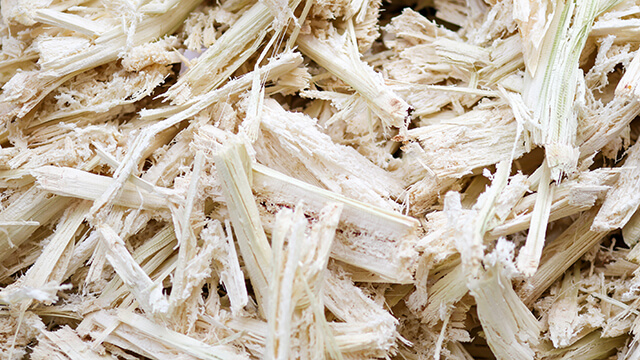
The DDGS (Distillers’ Dried Grains and Solubles) for cattle feed is another of the benefits that come from ethanol production. It is produced when the stillage is dewatered, evaporated and dried, and has always been an important source of income for ethanol producers.
Ever since the 1970s, Alfa Laval has been the leading supplier of stillage dewatering decanters.
The unique VecFlow rotating feed zone feature combined with Power Tubes, for example, delivers a very dry cake, while keeping the energy consumption low, while AlfaVap plate evaporators and AlfaFlash forced-circulation flash evaporators are used to reach high thin stillage concentrations in the most energy-efficient way.
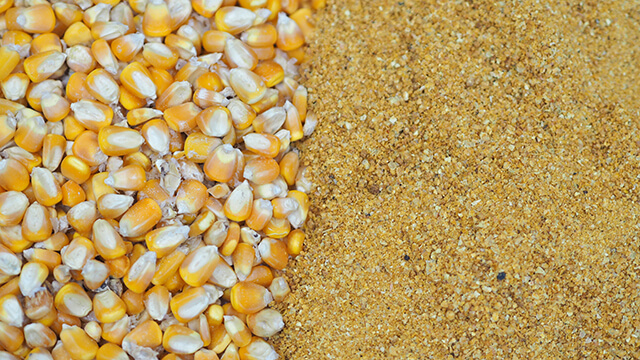
Further benefits of ethanol by-products
Stillage contains valuable products that can be extracted, such as proteins and corn oil, and Alfa Laval has the technology and expertise to maximize the value of your processes.
The Alfa Laval Prodec Oil Plus decanter delivers a patented solution for oil separation that results in corn oil yields well beyond industry standards. This decanter is purpose-built for efficient oil extraction, with a long extraction zone and a specific internal flight arrangement. These decanters can be used either on the whole stillage, on the evaporated syrup or even on both for the highest possible oil yield. Alfa Laval decanters can also extract valuable proteins that can be fed to cattle and poultry.
Energy efficiency
In recent years, the average energy balance in bioethanol plants has significantly improved. However, through talking to ethanol producers today, it becomes clear that there is still untapped potential for further energy savings.
Alfa Laval’s products are designed to improve the energy balance of bioethanol plants, while also delivering smooth operation and ensuring maximum uptime as:
- High-performance heat exchangers provide maximum heat recovery from any process stream
- Superior decanters eliminate the degradation of solids feed in ethanol process
- Industry-leading separation efficiency delivers reduced energy consumption with the clearest centrate
- Overall performance means improved bottom lines, increased production uptimes, and reduced carbon footprints
Alfa Laval service providers are always on hand to help maximize energy recovery and overall equipment performance.
Case stories

Documents