Membranas tipo espiral
Una amplia gama de membranas espirales sanitarias de ajuste completo para ósmosis inversa (OI), nanofiltración (NF), ultrafiltración (UF) y microfiltración (MF) recuperan, purifican, fraccionan o concentran eficazmente productos en industrias como la alimentaria, de bebidas, láctea, biotecnológica/química de base biológica y farmacéutica. Las membranas en espiral también pueden utilizarse en la recuperación de agua.

Experimente las mejores condiciones de flujo posibles para una separación eficiente, un flujo superior y una larga vida útil
- Baja inversión inicial y bajos costes de sustitución gracias a su diseño duradero.
- Rentable: bajo consumo de energía (en comparación con la membrana cerámica) y diseño compacto que requiere un espacio mínimo en el suelo.
- Eficiente: no es necesario sustituir ni desechar cartuchos o consumibles utilizados en la filtración tradicional sin salida.
- Excelente estabilidad química y térmica con alta resistencia a pH y temperatura
- Disponible tanto en hoja plana (para proyecciones o trabajos de laboratorio) como en espiral (aplicaciones más grandes) para ayudarle a crecer
Alfa Laval lleva más de 50 años trabajando con la filtración por membranas, y los conocimientos y la experiencia adquiridos con esta tecnología constituyen una base sólida para el diseño de membranas enrolladas en espiral eficientes en la actualidad. Nuestras membranas en espiral cubren un amplio espectro de tamaños de poros para diferentes propiedades de separación. Se basan en una construcción única de material de soporte de polipropileno o poliéster con un diseño sanitario que se adapta perfectamente y proporciona unas condiciones de limpieza óptimas. Todos los materiales cumplen con las normativas de la FDA para aplicaciones sanitarias. Las membranas en espiral están disponibles con diferentes tipos de membrana y en diferentes combinaciones de longitud, diámetro y espaciador de alimentación para garantizar un rendimiento óptimo para su aplicación.
Our spiral wound membrane materials are compliant with all major regulations
All membrane materials used for both flat sheet and spiral wound membrane configurations meet EU Regulation (EC) 1935/2004, EU Regulation 10/2011, EU Regulation (EC) 2023/2006 and FDA regulations (CFR) Title 21, and are suitable for use in food and pharmaceutical processing applications. Compliance also extends to the related equipment and fittings, including items such as plate-and-frame units, element housings and pumps, supporting safe and efficient spiral membrane filtration in a wide range of industries.
How do spiral membranes work?
The basic technology behind membrane filtration involves using a semi-permeable membrane to separate a liquid into two distinct streams.
Pumping this liquid across the surface of the membrane creates a positive trans-membrane pressure that allows any components smaller than the porosity of the membrane to pass through, forming the permeate.
Any components larger than the pore size simply cannot pass through, and remain behind in what is called the retentate. The surface of the spiral wound membrane is kept free of blockages by the force of the liquid flow moving parallel to the membrane surface.
Efficient spiral membrane filtration
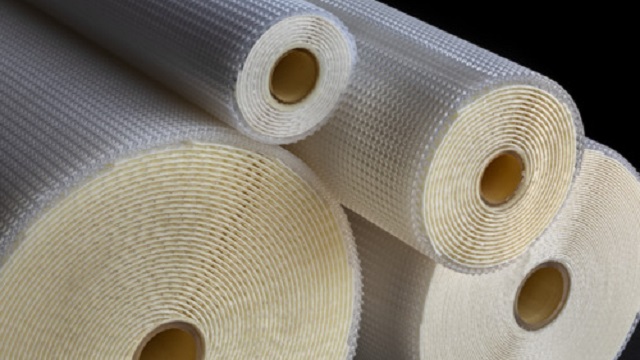
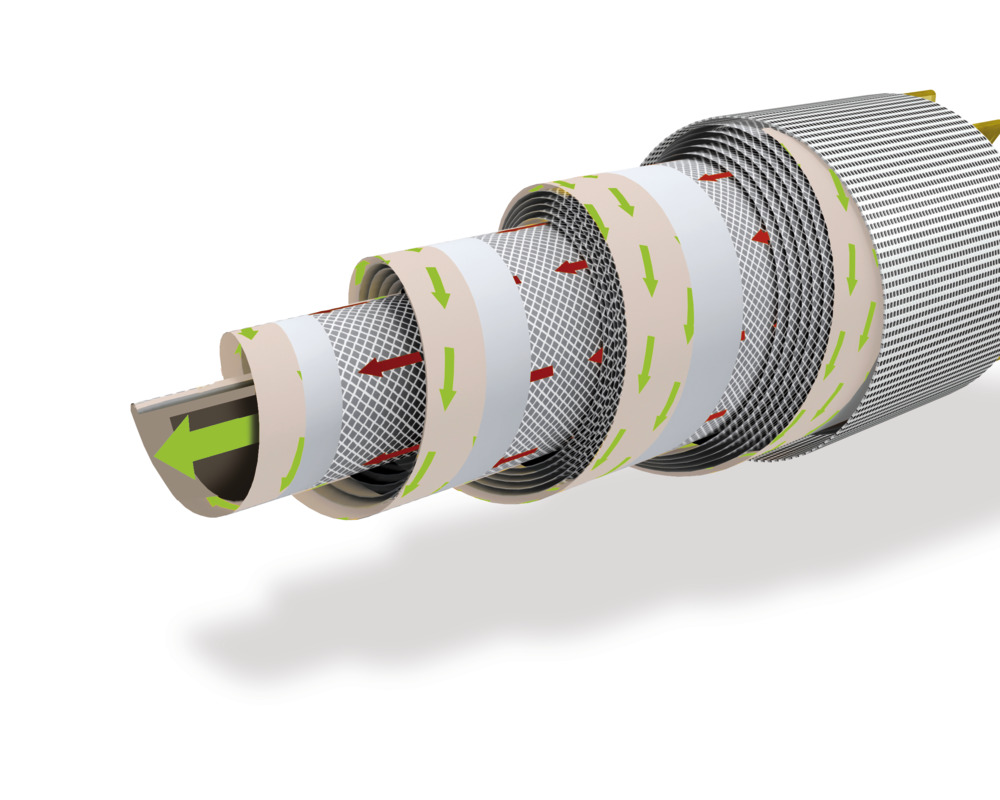
A spiral membrane comprises of several membrane 'envelopes' with two membrane sheets separated by a permeate spacer mesh, each glued to a central permeate collection tube.
Between each pair of envelopes there is a spacer which creates the feed channel, allowing the feed to flow across the length of the spiral wound membrane, whilst the permeate passing through the membrane into the membrane envelope flows in a spiral pattern to the permeate collection tube.
Red = Feed/retentate.
Green = Permeate.
DuroLac™ UF spiral membrane elements - Optimal performance for plant efficiency
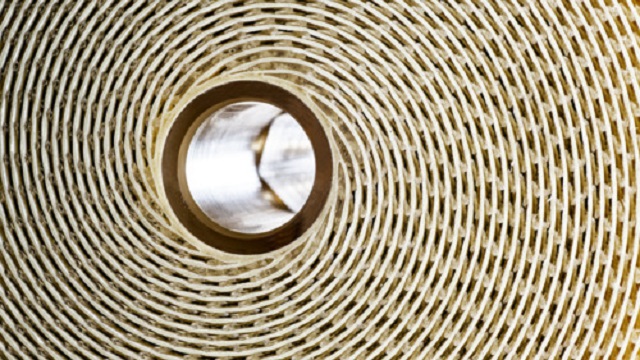
Achieve the efficiency and sustainability of dairy plants with DuroLac™ UF Spiral Membrane Elements. Made for various dairy applications, such as milk and whey, these innovative membrane elements offer up to a 15% increase in permeate output per element, significantly boosting plant performance. By reducing energy consumption and lowering utilities usage, DuroLac™ membranes contribute to a more cost-efficient operation. With tolerance to high pH and temperature, and compliance with stringent regulations, DuroLac™ membranes guarantee quality, reliability, and durability.
Related products for membrane filtration
Let us help you
Our industry experts can assess your unique requirements and recommend the ideal equipment for your process. Whether you require microfiltration, ultrafiltration, nanofiltration, or reverse osmosis, Alfa Laval has the expertise and technology to deliver the perfect solution.