
Línea M
Los intercambiadores de calor de placas y bastidor con juntas de la Línea M de Alfa Laval se utilizan para una presión de diseño elevada (>10 bar/145 psi), como en las bebidas carbonatadas. La amplia gama de tipos de placas y juntas cumple con los requisitos de Food Contact Materials (FCM) para la pasteurización y otras tareas de calentamiento y enfriamiento en aplicaciones higiénicas y de servicios en las industrias de los productos lácteos, los alimentos, las bebidas y farmacéutica.
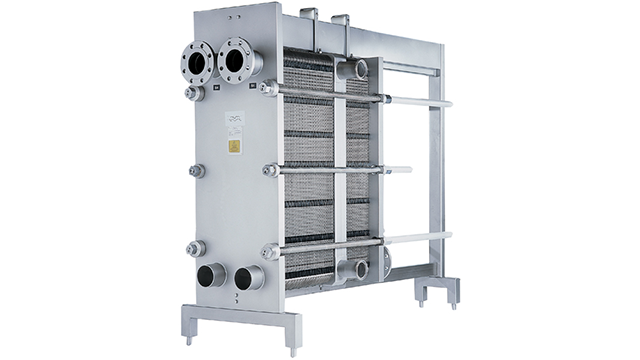
Una opción competitiva para procesos higiénicos a alta presión y aplicaciones de servicios
- Diseñados específicamente para una alta presión de diseño
- Facilidad de mantenimiento: juntas que cumplen con las normas de la FDA para permitir una apertura, una inspección y una limpieza sencillas.
- Resistencia a las incrustaciones y eficiencia térmica gracias a la gama de profundidades de presión y los patrones en espiga.
- Flexibles: el área de transferencia de calor se puede modificar mediante el añadido o la retirada placas o combinando diferentes placas y materiales.
- Adecuados para intercambiadores de calor multisección para pasteurización que ahorran espacio, tuberías y costes
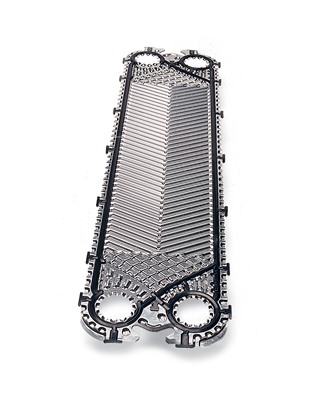
Plate types for different hygienic needs
Two different plate types are available for BaseLine & M Line gasketed plate heat exchangers:
- Chevron type plate pattern ensures good distribution of the product as well as high thermal efficiency and is used in food, dairy, beverage and pharma industries.
-
Gemini double-wall plates ensure a fully mix-proof design. It consists of two plates pressed together and prevents cross contamination between fluids in case of leakage through the plates.
The chocolate pattern distribution area ensures that the fluids are evenly distributed across the entire plate to avoid stagnant zones that can result in fouling.
The chocolate pattern distribution area ensures that the fluids are evenly distributed across the entire plate to avoid stagnant zones that can result in fouling.
Cómo funciona
Channels are formed between the plates and the corner ports are arranged so that the two media flow through alternate channels. The heat is transferred through the plate between the channels, where the counter-current flow helps attain the highest possible efficiency. The corrugation of the plates provides the passage between the plates, supports each plate against the adjacent one and enhances the turbulence, resulting in efficient heat transfer. Our thermal design engineers will help you design and select the model and configuration that is suitable for your application needs while delivering maximum thermal performance and minimizing pressure drop.